Henry Joseph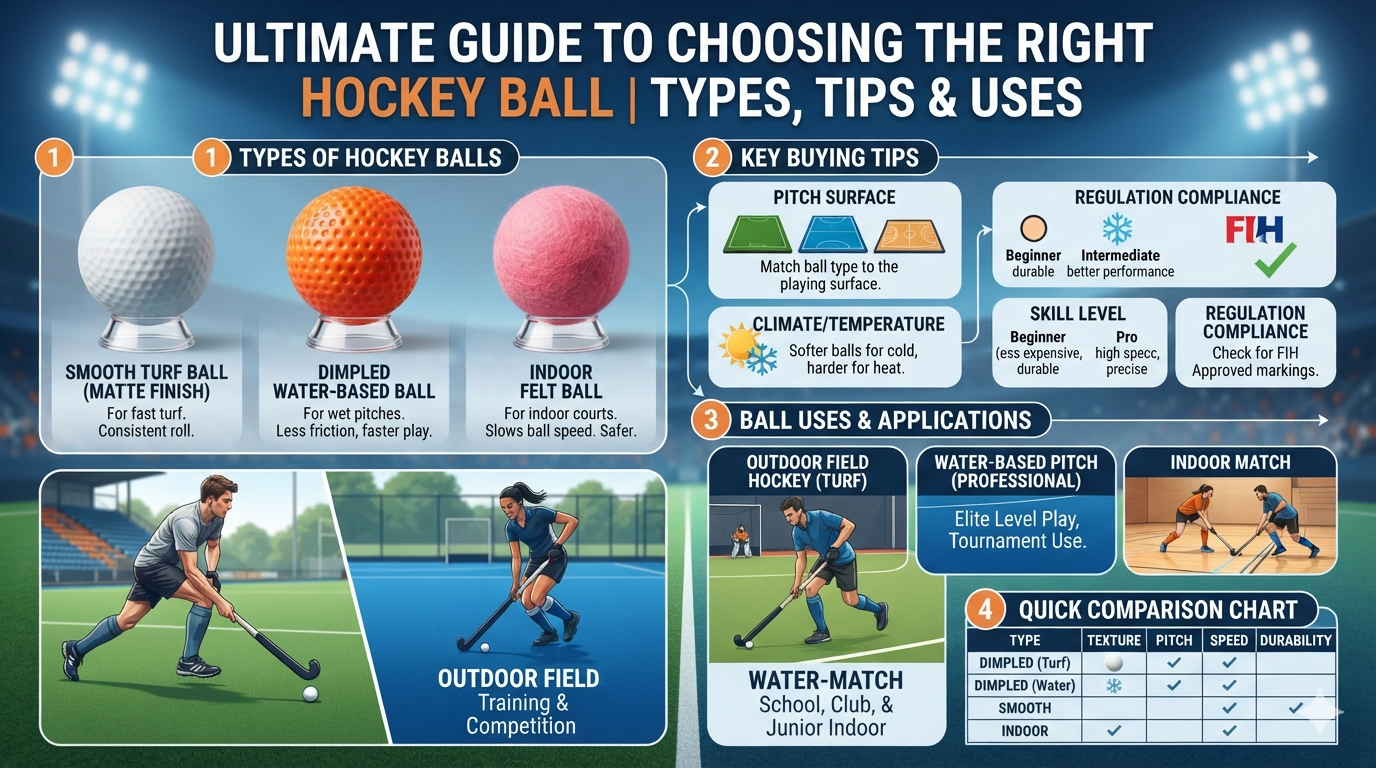
Playing hockey is an absolute blast, whether you are running across a fresh green grass field or skating fast on smooth pavement. But to get the game started, you need one very crucial piece of equipment: the right hockey ball. Picking the correct ball makes a huge difference in how fast you play, how high the ball bounces, and how much fun you have with your teammates.
Many people think every round ball used in sports is the exact same, but that is not true at all. A ball made for indoor wood floors will not work well on outdoor asphalt, and a hard field ball can easily crack if used in extreme cold weather. In this comprehensive guide, we will break down everything you need to know about every type of hockey ball so you can play your best game every single time.
What Is a Hockey Ball and Why Does Choice Matter?
A hockey ball is a specially designed round ball built for various styles of hockey played on surfaces other than ice. Unlike an ice hockey puck, which is flat and glides across ice, a ball is designed to roll smoothly over turf, wood, concrete, or gym floors. Choosing the right one ensures that your passes stay accurate, your shots go where you aim, and nobody gets hurt by using the wrong equipment.
Using the correct ball also protects your stick from breaking prematurely. For example, using a heavy, hard ball on a lightweight indoor stick can shatter the stick head over time. Different games require different weights, materials, and internal designs. Understanding these basic differences will instantly raise your sports IQ and make you a smarter player on the court or field.
Understanding the Standard Field Hockey Ball
When people talk about traditional outdoor matches, they are usually referring to a classic field hockey ball. This specific ball is hard, dense, and typically made from solid plastic or cork covered in seamless PVC. It is built to roll quickly across dense grass or synthetic astro-turf fields without bouncing unpredictably or slowing down too fast during long passes.
Most official match balls feature a dimpled surface, very similar to the small dimples you see on a golf ball. These dimples help cut through the air and allow the ball to roll at a consistent speed, even when the grass is slightly wet from morning dew. If you play on organized teams, owning a proper field ball is essential for practicing your dribbling, passing, and powerful flick shots at home.
| Feature | Field Hockey Specifications |
| Primary Surface | Natural grass, Astro-turf, Synthetic turf |
| Core Material | Solid cork, plastic, or hard composite resin |
| Exterior Texture | Dimpled surface (for aerodynamics) or smooth |
| Typical Weight | Approximately 5.5 to 5.7 ounces (156 to 163 grams) |
| Main Advantage | Fast rolling speed and true trajectory on outdoor fields |
The Essentials of a Street Hockey Ball
If you love playing pickup games in your driveway or down at the neighborhood park, you need a high-quality street hockey ball. Concrete and asphalt are very rough surfaces that can quickly ruin soft plastic balls. Street balls are engineered with durable PVC shells that can take a heavy beating against abrasive ground without splitting or losing their shape.
One of the biggest problems with street games is ball bounce. Standard rubber balls bounce way too high when they hit rough asphalt, making them almost impossible to control with a stick. High-grade street balls are often filled with air, liquid, or specialized high-density foam that absorbs the impact, keeping the ball low to the ground so you can pass and shoot cleanly.
How Temperature Impacts Street Hockey Play
Did you know that outdoor temperature changes how a street hockey ball behaves on concrete? When the weather gets freezing cold in the winter, standard plastic becomes brittle and bounces high like a superball. In the summer heat, that same plastic becomes soft and squishy, making the ball feel heavy and sluggish during gameplay.
To fix this issue, manufacturers create temperature-specific street balls:
- Cold-Weather Balls: Formulated with softer plastic mixtures so they remain flexible and low-bouncing in low temperatures.
- Warm-Weather Balls: Made from harder, denser plastics so they do not get mushy when played on hot summer asphalt.
Choosing the right ball for the current weather keeps your game fast, smooth, and predictable.
Exploring the Features of a Roller Hockey Ball
Roller hockey is a fast-paced sport played on inline skates, usually inside an arena with smooth plastic tile flooring or concrete. A dedicated roller hockey ball needs to match the high speed of the players. These balls are usually designed with lightweight materials and smooth outer skins so they can glide freely across specialized rink tiles without catching or stopping suddenly.
Many inline balls feature tiny center weight pegs or interior liquid cores. These smart design features prevent the ball from floating into the air when you take a hard wrist shot or slap shot. Keeping the ball low to the rink surface allows goalkeepers to make fair saves and helps teammates trap passes quickly without losing control of their momentum on skates.
Indoor Fun with a Floor Hockey Ball
Floor hockey is commonly played in gymnasiums, school halls, or community centers on hardwood floors. Because indoor gym floors can be easily scuffed or scratched, a floor hockey ball is designed to be soft, lightweight, and gentle on indoor surfaces. They are often made from flexible vinyl, soft foam, or hollow plastic with small air holes similar to a pickleball or wiffle ball.
These lightweight safety features make floor balls ideal for physical education classes, young kids, and beginner leagues. Even if a player accidentally gets hit on the shin or arm with a soft floor ball, it will not leave a painful bruise like a hard outdoor ball would. They are inexpensive, super safe, and perfect for learning the basic rules of stick handling and passing.
Key Differences Between Outdoor and Indoor Balls
Comparing indoor and outdoor options side-by-side helps show why you should never mix them up during play. Outdoor games demand heavy, dense balls that can withstand wind, rough pavement, and damp grass. Indoor games require lighter, softer balls that protect indoor flooring, prevent wall damage, and keep players safe in tight gym spaces.
Using an outdoor hockey ball inside a school gymnasium can quickly leave dark rubber scuff marks on the floor or shatter plastic baseboards. On the flip side, using a soft indoor ball outside on rough concrete will ruin the ball within minutes. Matching the ball to your specific playing environment ensures that your gear lasts longer and your game stays fast and fun.
How to Properly Maintain Your Sports Gear
Taking care of your gear extends its lifespan and saves you money. Dirt, sand, and small pebbles can stick to a wet hockey ball, which wears down the blade of your favorite stick over time. After playing outdoors on dirt or wet grass, wipe your balls down with a damp cloth and warm water to remove grit and debris before storing them away.
Always store your equipment inside a dry room at room temperature. Leaving your gear bag inside a freezing cold car trunk or under direct, scorching sunlight in the backyard will cause plastic materials to degrade, crack, or lose their original shape. A simple routine of cleaning and storing your balls indoors ensures they remain ready for game day every single week.
How to Choose the Right Ball for Your Skill Level
When you are first learning how to play, stick control can feel a little tricky. Beginners should start with a slightly softer, low-bounce hockey ball. Softer balls move at a controllable speed and do not bounce away when you try to receive a pass, making it much easier to build confidence, hand-eye coordination, and proper stick-handling habits.
As your technique improves and your passing becomes more precise, you can move up to official match-grade balls. Harder balls roll much faster, requiring quicker reflexes, sharper vision, and stronger wrist strength. Choosing gear that matches your current skill level prevents frustration and helps you enjoy every step of your skill development journey.
Safety Gear and Best Practices on the Court
Even though playing with a soft ball reduces the risk of minor bumps, safety should always come first in any sport. Even a lightweight hockey ball can cause painful injuries if it strikes an unprotected eye, ankle, or mouth at high speed. Wearing proper protective equipment keeps players safe so everyone can focus purely on having fun.
Essential safety gear includes:
- Shinguards: Protects lower legs from accidental stick swings and stray shots.
- Mouthguard: Essential for safeguarding teeth during fast-paced play.
- Eye Protection or Helmets: Highly recommended for indoor leagues and youth players.
- Footwear: Wear high-traction sneakers for outdoor courts or non-marking gym shoes for indoor wood floors.
Conclusion
Finding the right hockey ball comes down to knowing where you plan to play, what surface you are on, and the age group of the players. Whether you need a heavy dimpled ball for turf, a durable liquid-filled option for street play, a smooth option for roller rinks, or a light plastic ball for gym class, picking the correct ball guarantees a safer, faster, and far more enjoyable game. Grab your stick, gear up with the right equipment, and head out to enjoy your next match!
(FAQs)
What is a field hockey ball made of?
A traditional field ball is made with a solid core of cork or hard composite plastic, encased in a durable, seamless PVC outer shell. Many official match balls feature tiny exterior dimples for smooth rolling on wet astro-turf.
Can I use a street hockey ball indoors on gym floors?
It is not recommended. Heavy street options can leave scuff marks on hardwood floors and bounce too wildly off indoor gym walls. It is best to use a lightweight vinyl or hollow plastic floor ball for indoor gym games.
Why do some hockey balls have liquid inside them?
Liquid-filled balls are designed specifically for street and ball hockey. The internal liquid absorbs kinetic energy upon impact, which prevents the ball from bouncing wildly high on hard, uneven concrete surfaces.
How do I stop my street ball from bouncing in cold weather?
In cold weather, standard plastics harden and bounce too much. To fix this, switch to a specially designated cold-weather ball made with softer polymer materials engineered to stay pliable in low temperatures.
Are all hockey balls the same size and weight?
No, size and weight vary depending on the style of hockey. Field options weigh around 5.5 to 5.7 ounces, while indoor floor balls are much lighter (around 1 to 2 ounces) to prevent injuries and scuffed floors.
How long does a typical hockey ball last before replacing it?
With regular care, a quality ball can last an entire season or longer. Replace your ball as soon as you notice visible deep cracks, flat spots, or significant warping that affects its ability to roll in a straight line.